
USPS can now invoice sellers for foreign duties their buyers did not pay
A USPS rule in force since October 19, 2026 lets the Postal Service invoice you for duties, taxes and import fees a foreign country could not collect from your buyer. You must pay even while you dispute.
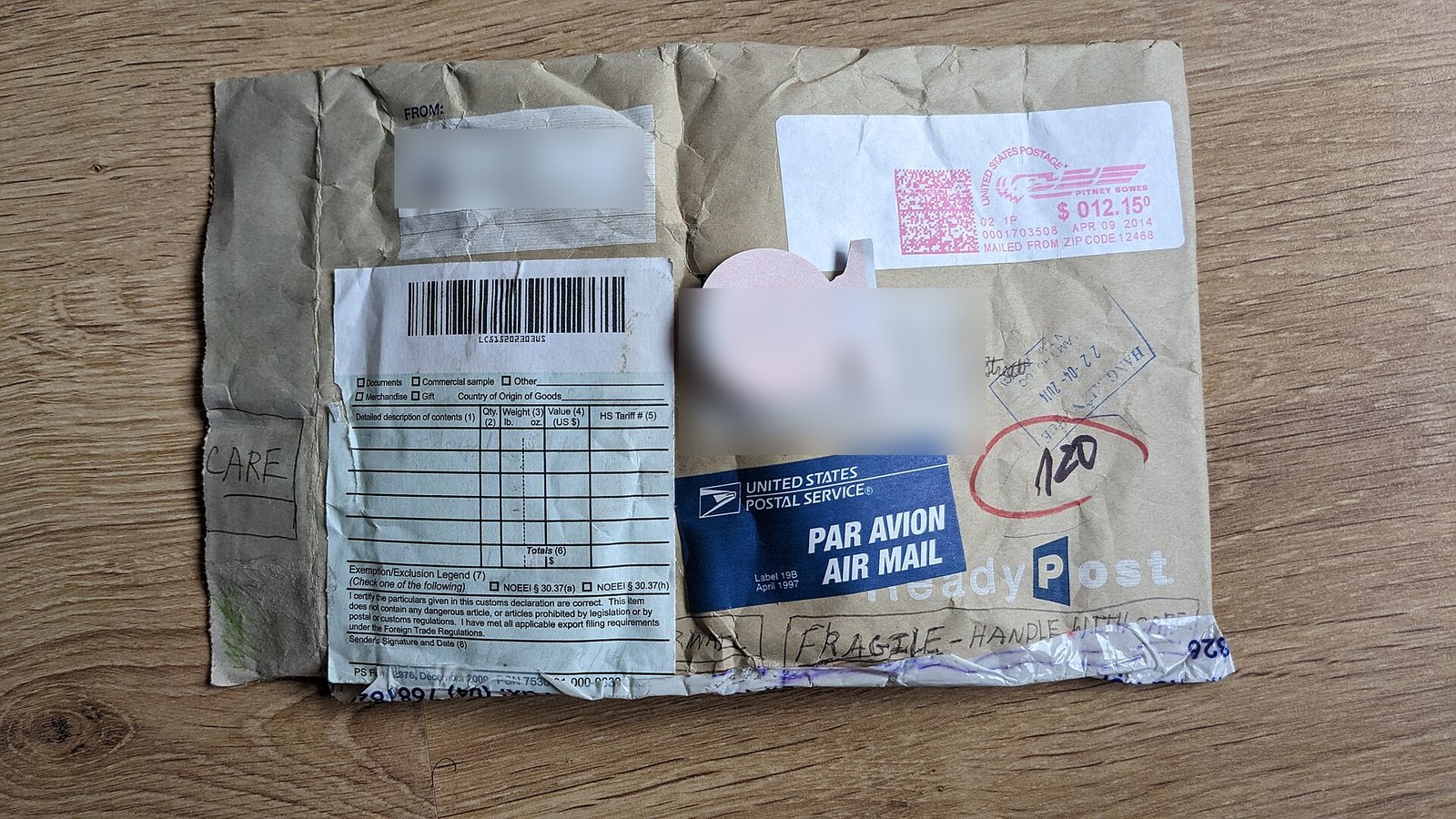

Since October 19, 2026, the US Postal Service can send you an invoice when a destination country's customs authority or postal operator tries to collect duties, taxes or import fees on your international parcel and they have not been paid in full. The change is an interim final rule that rewrites parts of the International Mail Manual; comments are open until November 18, 2026.
For: ResellersSmall businesses
Some links on this page are affiliate links: if you sign up through one, we may earn a commission at no extra cost to you. It never decides what we report.
The short version
- USPS published an interim final rule in the Federal Register on October 19, 2026, effective the same day, that adds a new section 424, "Unpaid Destination Customs Charges", to its International Mail Manual.
- If a party in the destination country (customs, the postal operator, a broker) seeks duties, taxes or import fees from you or USPS and they are unpaid, USPS will send you an invoice. You must pay it "even if the mailer disputes the assessment", and whether the parcel is delivered, lost, damaged or returned.
- Late payment accrues interest at 6 percent a year, and USPS can also recover its collection costs.
- Where a destination requires delivered duty paid (DDP) shipping, you must ship DDP. USPS names the EU's end of de minimis on July 1, 2026 as the reason. Comments are due November 18, 2026.
By the numbers
Key dates
- 1Nov EU EUR 2 handling fee per item expected to start
- 18Nov Comments due on USPS unpaid customs charges rule
What changed
The rule (91 FR 66000, October 19, 2026) explains that "as of July 1, 2026, the European Commission eliminated the de minimis exemption for most low-value goods" bound for the EU, and that some EU postal operators now require certain items to travel under an approved delivered duty paid solution, charge fees when customs data is inaccurate, and may seek unpaid amounts from the sender when the buyer does not pay. USPS says duties, taxes and import fees "are not included in the postage paid by the mailer".
The rule changes four parts of the International Mail Manual:
- 112 Mailer responsibility: you must make sure the electronic customs form is complete and accurate, find out which documents the destination needs, and provide them on time. If you do not, the parcel "may be returned or confiscated and the mailer may be subject to additional charges". Where the destination requires DDP, you must ship DDP and make sure all duties, taxes and import fees are paid on time.
- 131.34 Foreign customs information: USPS does not keep or give out information on foreign charges, "except as provided in 362 and 424" (its DDP and unpaid-charges sections).
- 361.13 Import fees: import fees can be applied by brokers, customs representatives, government agencies, postal operators and customs authorities, "and may apply even when duties and taxes are not applicable".
- 424 Unpaid destination customs charges (new): USPS invoices you for unpaid amounts. You can dispute with USPS only its own accounting errors; challenges to the amount itself go to the foreign party "without involvement from the Postal Service". If USPS later gets a refund or credit, it refunds you "if deemed practical".
What it means for your business
When you ship duties unpaid, the charges are meant to be paid by your buyer. Under this rule, if the destination country cannot collect them and seeks them from you or USPS, the unpaid amount can come back to you as a USPS invoice, on top of the item and postage you have already spent.
Here is the fixed EU part of such an invoice for a parcel worth up to EUR 150, using the EU's EUR 3 customs duty per item and the EUR 2 Union handling fee per item the European Commission expects to apply from November 1 (our brief):
| Parcel (illustrative) | Items | EUR 3 duty | EUR 2 fee | Fixed EU charges |
|---|---|---|---|---|
| One sweater, EUR 45 | 1 | EUR 3 | EUR 2 | EUR 5 |
| A sweater and a scarf, EUR 70 | 2 | EUR 6 | EUR 4 | EUR 10 |
| Three different prints, EUR 90 | 3 | EUR 9 | EUR 6 | EUR 15 |
Illustrative, for parcels arriving from November 1, 2026. Import VAT at the destination's rate and any clearance or postal fee come on top; USPS says most countries collect a customs clearance and delivery fee. An "item" is a declaration line, so identical pieces count once.
The interest is small: on an illustrative $60 invoice paid 90 days late, 6 percent a year comes to $0.89 ($60 x 0.06 x 90 / 365). The bigger risk is having no say: you pay first, and any argument about the amount is with the foreign customs office or postal operator, not USPS.
Who is affected
- US sellers who ship goods abroad with USPS international mail, from their own site, Etsy, eBay or elsewhere, when they buy the postage themselves.
- The rule covers every destination; its own example is the EU, where it says some postal operators now require delivered duty paid shipping.
- This rule does not change postage prices; it covers who pays foreign duties, taxes and import fees, and how USPS collects them.
What to do now
- Check each destination's rules before you ship: where DDP is required, ship DDP (USPS points to its Delivered Duty Paid service, "if available").
- Fill in the customs form fully: a clear description, value, quantity, weight and HS code per line. Inaccurate data is one of the triggers USPS names.
- Tell EU buyers up front who pays duty, tax and fees at delivery, so fewer parcels are refused.
- Price EU orders with duty and fees included: run the numbers in our landed cost calculator or shipping cost calculator.
- To comment, email PCFederalRegister@usps.gov with the subject "Customs Requirements and Payment Procedures" by November 18, 2026.
Know your profit after shipping
Our Reseller Profit Tracker logs every item from buy to sold, with fees and shipping on each sale, so an international charge shows up in your profit right away. No subscription, no account, your data stays on your device.
Tools we recommend
Some of these are affiliate links: if you sign up, we may earn a commission at no extra cost to you.
SuanNews Weekly
The week's fee, tariff and shipping changes, every Friday
One short email: what changed for sellers and importers this week, the dates coming up, and the weekly quiz. You also get our free 9-page first-order-from-China checklist.
Free. No spam, unsubscribe anytime. Privacy
General information, not legal, tax or customs advice. Rules change often: check the official sources above or a licensed customs broker before you act. SuanSupply is not affiliated with any government agency or marketplace named here.